Solutions / Hybrid Energy Systems

Hybrid wind and solar systems designed for real-world conditions

Velox develops physical energy infrastructure built for real operating environments. From Aeroleaf micro-wind units to hybrid WindTree systems, the objective is reliable local production, lower diesel dependency, silent integration, and resilience across urban, industrial, remote, coastal, dusty, hot, cold, or constrained sites.

Hybrid wind + solar Silent operation Extreme-condition ready Diesel displacement
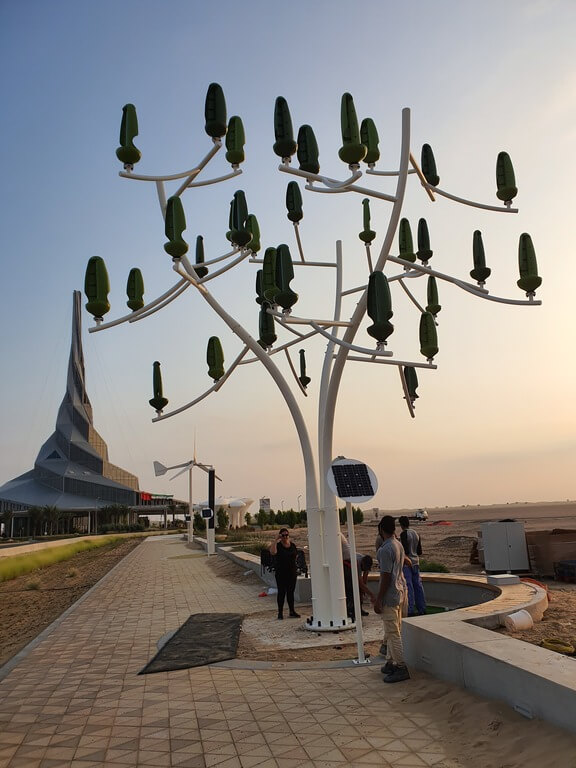
WindTree installation deployed in Dubai in a hot and exposed environment
Installed in hot and exposed environments WindTree infrastructure deployed in Dubai, illustrating real-world installation in a climate where visibility, environmental exposure and local production performance all matter.
System architecture

From distributed micro-generation to hybrid site infrastructure

Velox does not rely on a single format. It creates a physical infrastructure stack adapted to the production profile, architectural constraints and resilience needs of each site.

Aeroleaf micro-wind systems
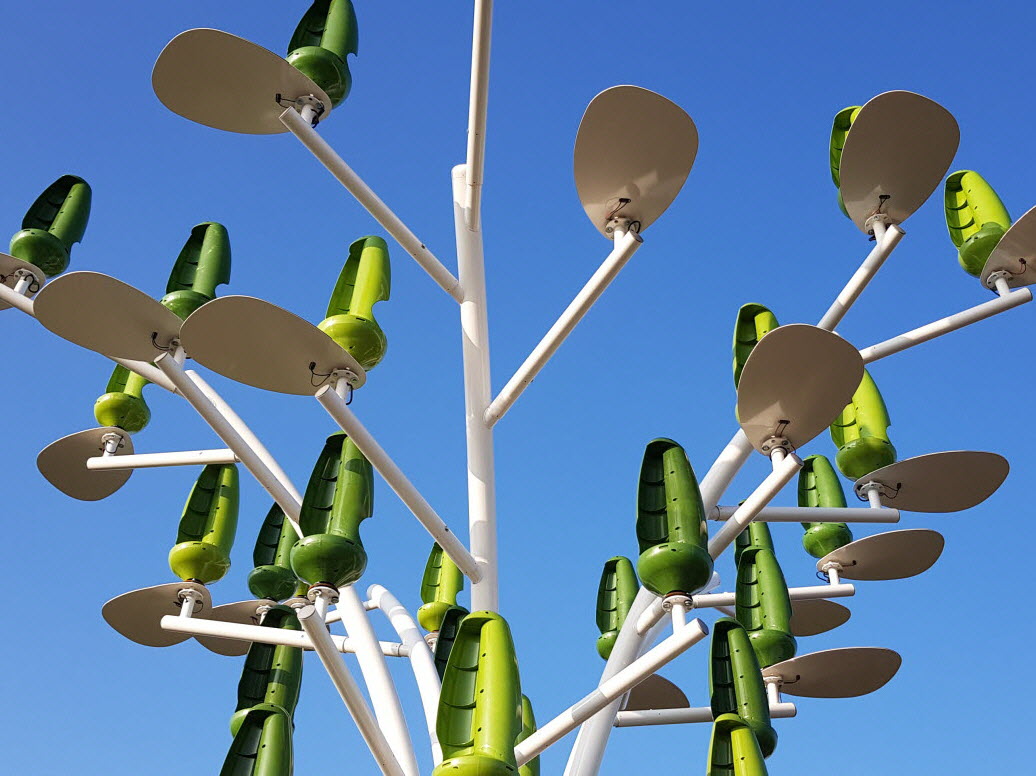
Close-up view of multiple Aeroleaf units showing modular wind micro-generation system
Multiple Aeroleaf units integrated in a single structure, illustrating modular deployment and scalable micro-generation density.

Aeroleaf is designed for distributed local generation. It is especially relevant in urban and built environments where modularity, visual integration and quiet operation matter. It helps create a visible and decentralized energy contribution layer closer to the point of use.

With a low starting threshold of around 2.5 m/s, Aeroleaf® is designed to capture more usable wind conditions across the year. The result is a system that can contribute over a greater number of days, improving the practical value of local generation in real operating environments.
Hybrid WindTree infrastructure

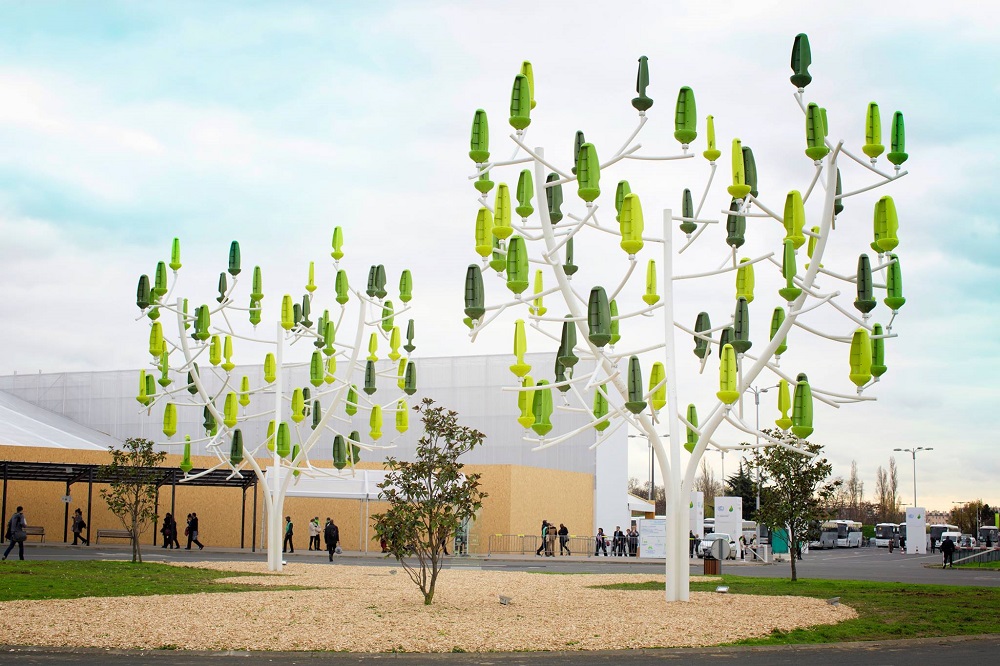
WindTree installations deployed at COP21 climate conference site
Multiple WindTree installations deployed at the COP21 climate conference site, illustrating real-world deployment at scale.

Hybrid WindTree systems move from micro-generation to more strategic site contribution. By combining wind and solar in a single infrastructure, they widen the production profile and create a stronger local energy base for sites that need more than one-dimensional generation.

This is particularly relevant for industrial sites, hospitality environments, ports, campuses, remote sites, islands and all contexts where diesel dependency or fragile grid access remains a structural issue.

336 W

Aeroleaf unit power

Distributed micro-generation designed to create visible, local electricity contribution at building or site level.
5.4 kW + 432 Wc

Hybrid WindTree range

A first hybrid infrastructure configuration combining wind production and solar contribution in one system.
9.0 kW + 740 Wc

Higher hybrid range

A stronger configuration for sites where local production needs to play a more strategic operational role.
Production note Installed power expresses system capability. Actual annual production depends on wind regime, solar exposure, site layout, environmental conditions, and operational profile. Detailed annual yield must be assessed per site.
Built as infrastructure

Designed as real infrastructure, not as a conceptual object

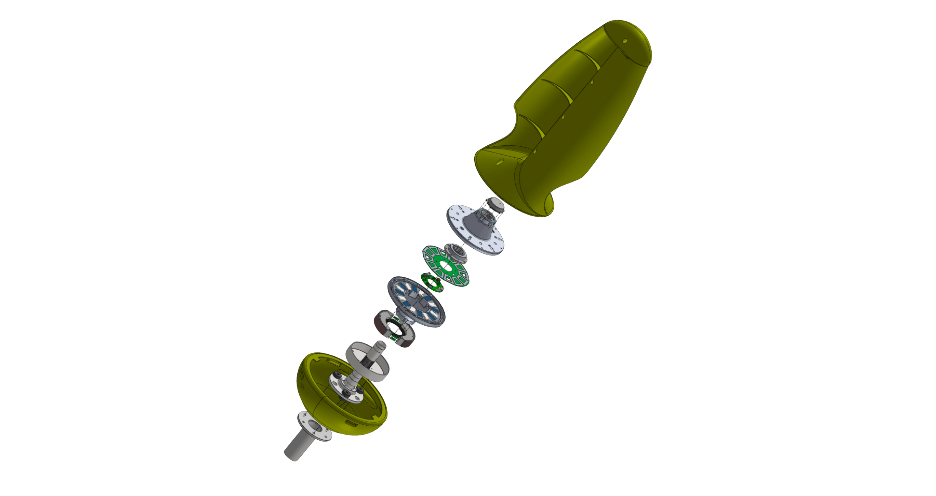
Behind its compact form, Aeroleaf integrates a precise mechanical architecture designed for durability, repeatability, and real-world operating conditions.

Exploded view of Aeroleaf internal mechanical architecture

The internal structure illustrates a true engineered system. Mechanical consistency, component integration and long-term outdoor reliability are central to its design logic.

2.5 m/s

Low wind start threshold

Designed to capture more usable wind conditions and extend production across a greater number of days.
Compact design

Integrated architecture

A compact mechanical structure supporting repeatability, durability and integration across environments.
Outdoor ready

Built for real-world conditions

Designed for long-term exposure across urban, coastal, hot, cold and constrained deployment environments.
Real-world conditions

Designed for silence, durability and environmental exposure

These systems are not meant for ideal laboratory conditions. They are meant for real deployment environments — including urban settings, coastal sites, hot climates, cold climates, dusty conditions and exposed operating contexts.

Silent integration

Quiet operation is essential for urban, hospitality and mixed-use environments. The infrastructure is designed to support local production without the intrusive profile typically associated with conventional wind systems.

Heat and cold resistance

The systems are intended for environments exposed to strong seasonal variations, from high temperatures to cold conditions, making them relevant across both southern and northern deployment contexts.

Dust, salt and coastal exposure

Dusty and saline environments are not edge cases — they are core deployment realities for ports, islands, coastal hospitality sites and arid regions. Infrastructure must be designed with those exposures in mind.

Ice and harsh weather

Operational credibility also depends on resistance to more demanding weather conditions, including ice, wind exposure and variable outdoor environments over time.

Hybrid Energy Systems are not only about local production. They are about maintaining credible production capability in the types of environments where resilience actually matters.
Diesel displacement

Reduce generator runtime. Lower fuel dependency.

In many real-world environments, diesel remains the default answer to continuity. The strategic value of hybrid local production is not to promise universal all-or-nothing substitution, but to replace a meaningful part of diesel-produced electricity with cleaner on-site generation.

Operational logic

Every kilowatt-hour generated locally is one less kilowatt-hour that needs to be produced by fuel alone. This reduces pressure on the generator, lowers fuel exposure, and improves continuity in environments where energy reliability cannot depend on ideal infrastructure conditions.

  • Lower generator runtime pressure
  • Reduced diesel consumption over time
  • Lower exposure to fuel logistics and price volatility
  • More diversified on-site energy profile
  • Improved resilience for isolated or exposed sites
The strategic objective is not theoretical substitution. It is meaningful diesel displacement through real local clean generation.

Illustrative annual diesel-equivalent savings

As a practical operating assumption, diesel generators often produce around 3.5 kWh per litre. On that basis, each 1,000 kWh of local electricity can avoid roughly 285 litres of diesel.

  • Aeroleaf: illustrative contribution equivalent to roughly 100 to 200 L/year avoided, depending on site conditions and deployment density
  • Hybrid WindTree — smaller range: roughly 850 to 1,050 L/year avoided in illustrative operating scenarios
  • Hybrid WindTree — upper range: roughly 1,400 to 1,700 L/year avoided in stronger production scenarios
These figures are illustrative and should be refined per site. They express operational order of magnitude, not a universal guaranteed output.
Deployment credibility

Physical infrastructure must prove itself in the field

The value of hybrid energy systems is not only theoretical. It lies in the ability to operate across real geographies, real weather conditions, and real site constraints — while remaining visually acceptable, operationally relevant and strategically useful.

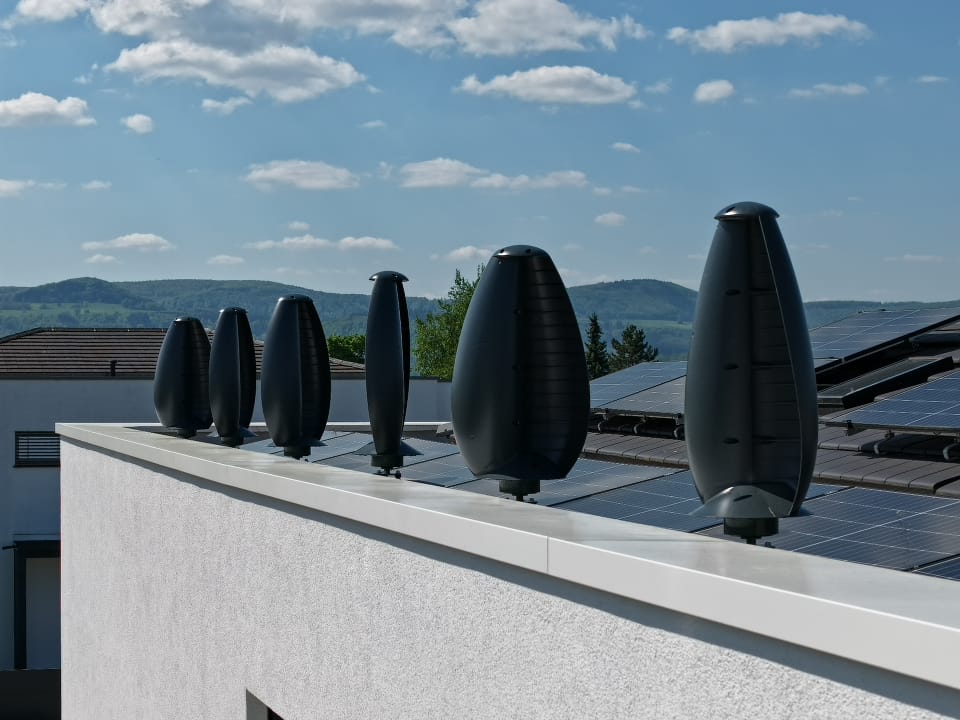
Aeroleaf micro-wind system installed on a rooftop in an urban environment
Aeroleaf units installed on a rooftop, illustrating real-world integration in urban environments where local generation, architectural compatibility and silent operation are critical.

Urban-ready formats

Relevant where visual footprint, noise profile and architectural integration are as important as pure production logic.

Remote and constrained sites

Particularly relevant where fuel dependency, fragile grid access or isolated operating conditions make resilience more valuable than nominal connection.

Visible local transition

Local infrastructure creates something measurable and visible: on-site production, lower carbon intensity, and a credible resilience story tied to real assets.

Beyond infrastructure alone While this page focuses on physical production systems, each deployment can also create a basis for future monitoring, optimization and data-driven operational layers.

Assess what hybrid infrastructure could do for your site

From distributed Aeroleaf deployment to hybrid WindTree infrastructure, Velox helps organizations reduce exposure, improve resilience and create real local production in environments where energy continuity matters.

Initial discussions typically begin with site conditions, exposure profile, diesel dependency and deployment feasibility.