
Africa's telecom operators know the number. Energy accounts for up to 60% of operating costs for towers in off-grid areas. Diesel powers the majority of the continent's roughly 500,000 BTS. Fuel prices have surged between 40% and 200% in several major markets over the past two years.
Nigerian operators collectively spend an estimated $400 million annually just to keep their towers running. MTN Nigeria alone has warned that rising diesel prices could wipe $87–102 million off its EBITDA in 2026. Vodacom Africa's energy bill hit $300 million in 2025 — up 5% year-on-year despite active mitigation efforts.
The problem is well understood.
The response, however, is still framed too narrowly: swap diesel for solar, reduce the bill, move on.
That framing leaves two significant value streams entirely uncaptured.
The real cost of a diesel-powered BTS
The fuel invoice is only the visible part.
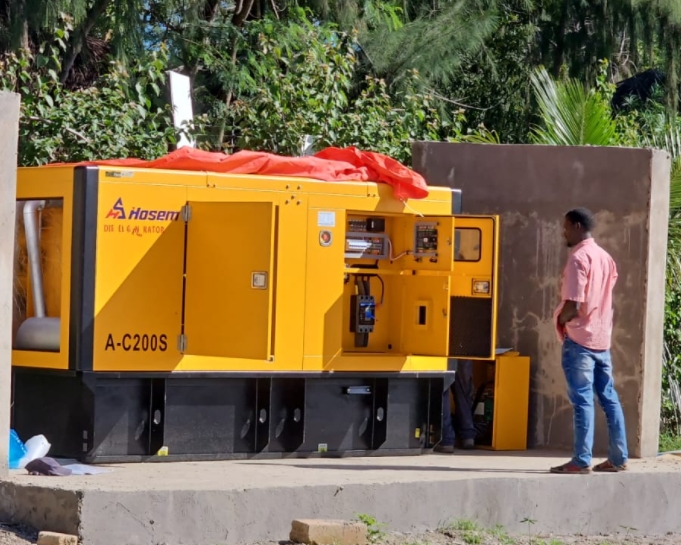
Logistics and security. Fuel theft is endemic across Sub-Saharan Africa. In Nigeria and DRC, operators routinely lose 15–30% of fuel to pilferage before it reaches the generator. Last-mile delivery to remote sites carries costs that rarely appear in energy budgets — but they are real.
Generator maintenance and downtime. Diesel generators require regular servicing, spare parts and skilled technicians. In rural sites, mean time to repair drives extended outages. Every hour of downtime is lost data revenue — in markets where data consumption is rising sharply but each gigabyte costs more to deliver.
Opportunity cost of unreliability. In parts of northern Nigeria and DRC, cellular outages linked to fuel shortages have disrupted mobile money, emergency communications and basic connectivity. In markets where network quality is a differentiation lever, the commercial cost of unreliability compounds over time.
Carbon liability. Scope 1 emissions from diesel generation are becoming a financing constraint — not just an ESG narrative. Safaricom raised $153.6 million in green bonds in part to fund its tower energy transition. Operators who cannot demonstrate measurable decarbonisation will find their cost of capital diverging from those who can.
The total cost of diesel dependency, fully loaded, is significantly higher than the fuel bill alone suggests.
① Energy savings — the value everyone captures
The energy case is established and strong.
Hybrid wind and solar systems reduce energy expenditure by 20–40%. Early deployments confirm the trajectory: MTN South Sudan cut fuel spending by ~30% after adopting solar. Airtel Africa, working with ENGIE Energy Access, reduced diesel use by more than half at sites in Zambia and DRC — saving approximately $2.1 million annually and avoiding 4,800 tonnes of CO₂. Orange reported a 30% reduction in operating costs and a 65% decrease in emissions by switching to a hybrid solar model.
The diesel bill shrinks. Reliability improves. Maintenance cycles lengthen.
This is the baseline. It is not the ceiling.
② Certifiable carbon credits — the value most operators overlook
Each kilowatt-hour of renewable energy produced on site — continuously documented by embedded sensors — corresponds to a measurable, timestamped tonne of CO₂ avoided, certifiable under the Gold Standard framework by an accredited third party.
On the voluntary carbon market, a Gold Standard-certified tonne of CO₂ avoidance trades between €80 and €120.
For a network of 500 hybrid-equipped sites avoiding an average of 10–15 tonnes per site per year, the carbon revenue potential — at a conservative 50% operator share — represents €200,000 to €450,000 annually. At the scale of a major operator running 20,000+ sites, that figure scales to €16–54 million per year — a structural contribution to investment payback that pure solar deployments leave entirely on the table.
③ Certified environmental data — the value nobody is talking about
This is the most underestimated opportunity in the entire transition debate.
The deployment logic of a telecom tower network is structurally identical to the deployment logic of a distributed environmental intelligence network. Towers are already where the data is most valuable: in remote areas, in climatically exposed zones, in markets where ground-level environmental data is scarce or non-existent.
Integrating an embedded sensing layer — temperature, humidity, air quality (CO₂, PM2.5), wind speed and direction, atmospheric pressure, solar irradiance — at the site level requires minimal additional footprint. But it fundamentally transforms what the infrastructure produces.
Who buys this data — and why it matters now.
Insurers need micro-climate data to price physical risk and calibrate exposure models. As climate volatility increases across Sub-Saharan Africa, the gap between regional estimates and actual field conditions is becoming financially material.
Governments and development agencies building climate MRV infrastructure need sensor nodes deployed where populations live and work — not in isolated technical cabinets. African operators are uniquely positioned to provide this at scale.
Agricultural programs, public health systems and urban planners across the continent operate with data that is years old, spatially coarse, and modelled rather than measured. Ground-truth data from a distributed tower network has structural value that no satellite product fully replaces.
And it feeds back into the network itself. Predictive maintenance signals derived from environmental and equipment performance data reduce reactive interventions and extend equipment life. In remote sites where every truck roll is expensive, earlier anomaly detection compounds quickly on the P&L.
A network of 1,000 hybrid-equipped towers is an energy asset. It is also, potentially, the largest distributed environmental intelligence network in its operating territory. That value does not require additional sites. It requires infrastructure designed to capture it.
Why the window is narrowing
Three forces are converging.
Fuel volatility is structural, not cyclical. Subsidy removal in Nigeria, geopolitical disruptions, last-mile logistics fragility — these are not temporary anomalies. They are the permanent operating environment.
5G amplifies everything. Next-generation networks require two to three times more energy per tower than 4G, and tower density must increase fourfold for equivalent coverage. The energy cost of 5G deployment on a diesel-dependent model is, in most African markets, prohibitive. Operators transitioning now are building the energy foundation 5G requires.
Capital markets are pricing in certified impact. Green bonds, impact funds and development finance institutions are directing capital toward projects with measurable, auditable outcomes. Operators who can demonstrate quantified decarbonisation — in tonnes avoided, in kWh of clean production, in certified field data — will access that capital on structurally better terms. The gap between operators with certified data and those relying on estimates will widen as frameworks tighten.
The question worth asking
The case for transitioning away from pure diesel dependency is no longer contested.
The question is not whether to transition. It is what kind of infrastructure to transition toward.
Infrastructure designed to generate one stream of value — cheaper energy — is a meaningful step forward.
Infrastructure designed to generate three — energy savings, certifiable carbon credits, and a certified environmental data layer — is a different category of asset entirely.
The infrastructure is already there. The question is whether operators choose to use it as a cost center — or as a multi-layer value asset.