
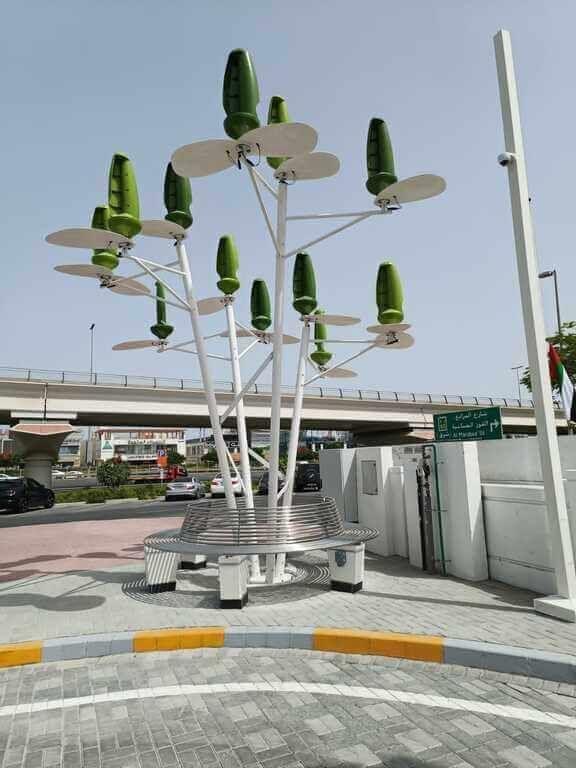
The promise of the smart city was never about technology. It was about a better quality of life. Cleaner air. Safer streets. Reliable energy. Services that work when people need them. Somewhere along the way, the technology became the goal.
Cities got smarter. Citizens did not always notice.
This is not a failure of ambition. It is a failure of design logic. For most of the past two decades, smart city investment has been conceived from the infrastructure inward — starting with the network, the sensor, the platform — rather than from the citizen outward. The result is technically sophisticated but experientially invisible.
The gap between smart systems and everyday life
Most smart city investments operate at the infrastructure level. Traffic algorithms. Grid sensors. Data platforms. Centralised dashboards. These systems create real operational value — but they are almost entirely invisible to the people they are supposed to serve.
A citizen walking past a connected lamppost does not experience connectivity. They experience a lamppost. A citizen crossing a bridge instrumented with structural sensors does not experience monitoring. They experience a bridge. The technology is present, but the value it delivers is entirely abstract.
This matters for more than experiential reasons. Infrastructure that citizens cannot see or interact with struggles to earn acceptance. It attracts suspicion. It justifies its budget lines with arguments that are technical rather than civic. And when public spending comes under scrutiny, it is precisely this kind of invisible, single-purpose infrastructure that is hardest to defend.
The measure of good infrastructure is not what it collects. It is what it provides.
The difference between monitoring and serving
There is a fundamental distinction between infrastructure that monitors citizens and infrastructure that serves them — and it shapes everything about how that infrastructure is designed, received and maintained.
Monitoring captures data about people. It is passive, invisible, and its value flows entirely upstream — to operators, planners and reporting platforms that citizens never interact with. The citizen is the subject of the data. They are not its beneficiary.
Service delivers value to people directly. It is visible. It is interactive. Its presence in public space is self-justifying, because the person using the charging point, resting on the bench or checking the local air quality reading understands immediately why the infrastructure is there.
This distinction has practical consequences for data quality, public trust and the long-term sustainability of urban investment.
When infrastructure serves, citizens notice it. When it only monitors, they do not — and neither, eventually, do their elected representatives.
What citizens actually want from public infrastructure
The demands are consistent and have not fundamentally changed. What has changed is the ability to meet them through integrated, multi-function infrastructure.
Energy reliability
Accessible charging for electric vehicles, bikes and mobile devices. Local production that is not wholly dependent on a fragile centralised grid. Energy that works where people are — not only where major grid infrastructure has already been deployed.
Environmental quality
Real, local, readable information about air quality, temperature and atmospheric conditions — not as abstract statistics published on a city portal, but as data available at the place it describes, in formats people can actually use to make decisions about where they go and what they do.
Comfortable public space
Seating. Shade. Light. Connection. The basic conditions that make outdoor spaces worth occupying. These are not luxuries. They are the minimum standard that determines whether infrastructure becomes part of daily life or is avoided entirely.
None of these demands are new. What is new is the ability to meet all three through a single integrated installation — rather than through three separate procurement cycles, three separate installation projects and three separate maintenance budgets.
Why integration changes the experience — and the economics
For most of urban history, each service required its own infrastructure. A bench was a bench. A sensor was a sensor. A charging station was a charging station. Each required separate procurement, separate installation, separate maintenance and a separate budget line.
The result is what most cities look like today: a patchwork of disconnected equipment, each serving a single purpose, none of it forming a coherent experience for the person navigating the space.
Integration does not simply reduce cost — though it does. It changes the quality of the experience entirely. When energy production, citizen services and environmental sensing coexist in the same physical object, the infrastructure becomes a place rather than a piece of equipment. It creates a legible civic presence. People understand what it is for because they can see and use what it does.
For city decision-makers, this shift changes the economics of public investment fundamentally. An installation that produces energy, provides services and collects data is not a cost centre. It is an asset — one that delivers multiple streams of value simultaneously and justifies its budget line through what it provides, not only through what it measures.
Fragmented infrastructure creates fragmented public space. Integration creates civic infrastructure that earns its presence.
The trust dimension
There is a dimension to citizen-facing infrastructure that technical specifications cannot capture: trust. And trust has become, in many cities, the limiting factor in smart infrastructure deployment.
Citizens are more willing to accept, use and maintain infrastructure they understand. Infrastructure that does something visible and useful earns its presence. Infrastructure that only collects data — silently, invisibly — generates suspicion rather than acceptance, particularly when its purpose is unclear or its data destinations are opaque.
The solution is not communication. It is design. When an infrastructure node produces local energy, displays local air quality and offers a place to sit or charge a device, its purpose is self-evident. Citizens do not need to read a brochure to understand what it does — or why it is there.
Transparency is not a communication strategy. It is a design requirement.
The data dividend from service-first infrastructure
There is a counterintuitive consequence of designing infrastructure around service rather than around data collection: the data becomes better.
A sensor installed in a utility cabinet collects readings from a controlled, isolated environment — one that may or may not reflect the conditions people actually experience. A sensor integrated into an active piece of public infrastructure collects data from the places people inhabit: streets, squares, parks, transit hubs.
This data is local, because the infrastructure is where people are. It is continuous, because the infrastructure is always operational. And it is credible, because it is anchored in a physical, visible place that auditors, planners and reporting frameworks can reference.
Cities, insurers, urban planners and regulators all need exactly this kind of ground-level data. The challenge has always been finding infrastructure capable of justifying its presence without the data value alone paying for it. Service-first infrastructure solves this problem structurally: it earns its place through what it provides, and the data it generates inherits that legitimacy.
When infrastructure serves citizens, the data it generates earns its own legitimacy — making it more useful for ESG reporting, insurance underwriting, urban planning and climate commitments alike.
What this means for public investment
Infrastructure that delivers visible citizen value is easier to fund politically. It is easier to maintain, because citizens have a stake in keeping it operational. It generates data that meets the increasingly stringent requirements of CSRD, SFDR and urban climate commitments. And it creates the kind of street-level presence that reinforces rather than undermines public confidence in city government.
None of this requires abandoning the ambitions of the smart city. It requires redirecting them — from infrastructure designed to feed platforms to infrastructure designed to serve people, and to generate, as a consequence, data that is more useful precisely because it is grounded in the real conditions of urban life.
The shift that is already underway
The cities that will succeed in the next decade are not necessarily those with the most sensors or the largest data platforms. They are the ones that deployed infrastructure citizens actually wanted — and that, as a result, generated data citizens actually trusted.
This is a different standard than technical performance. It measures infrastructure by its impact on everyday life rather than by its specification sheet. It asks whether the investment made the city more liveable, more legible and more resilient — not only more instrumented.
The tools to meet this standard now exist. The infrastructure category that combines energy production, citizen services and environmental sensing in a single integrated installation is no longer a concept. It is operational across four continents.